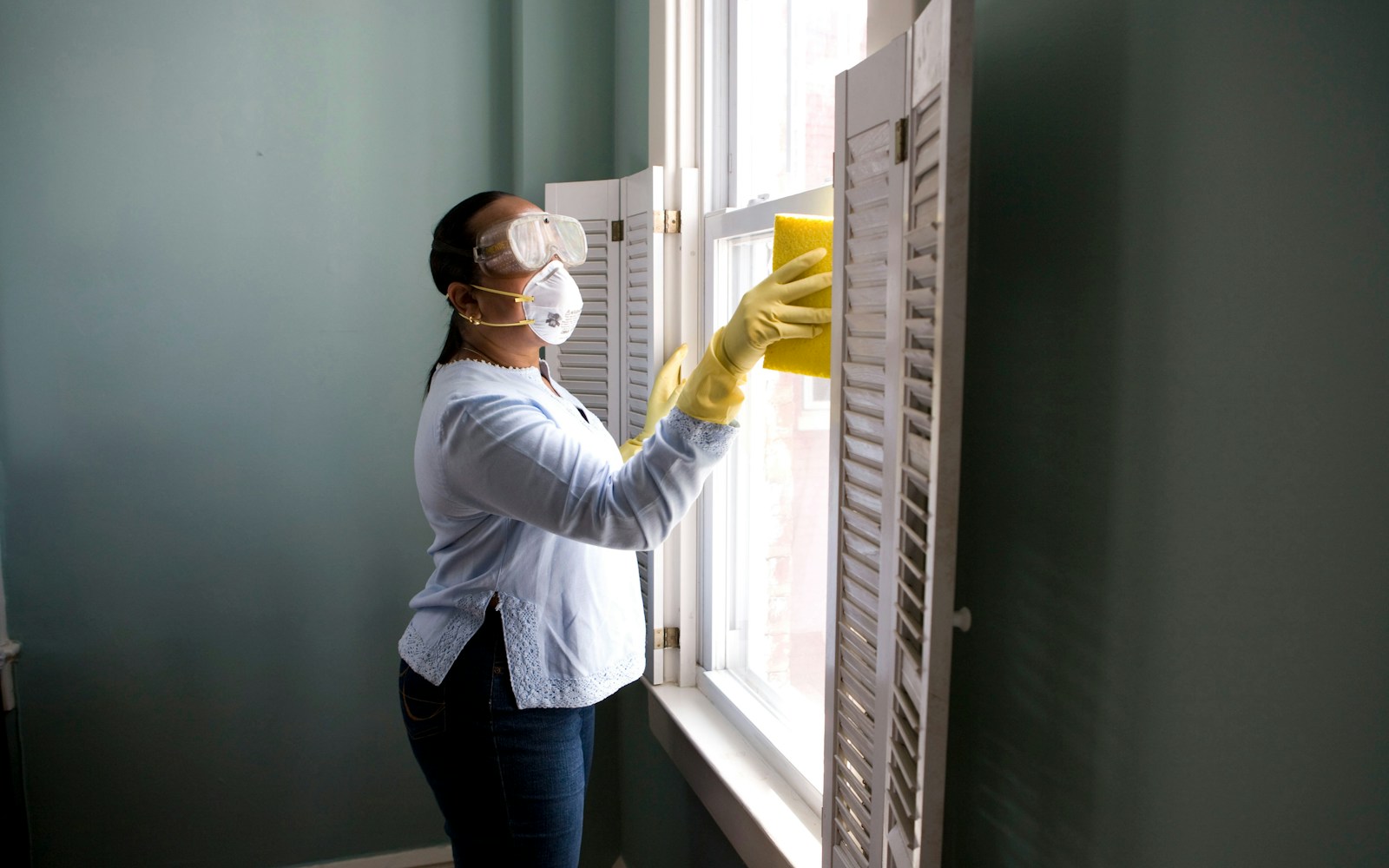
Construction dust after renovation: Why it's more dangerous than you think — and how to properly remove it
Gypsum dust, silica and paint particles linger long after tradespeople leave. What you need to know before moving back in.
On this page
After a renovation, construction dust isn't just annoying — it's a health risk, especially for children, the elderly and allergy sufferers. Gypsum dust, silica and paint particles hang in the air and settle on surfaces for weeks after tradespeople leave. Regular cleaning doesn't remove it. Here's why.
What does construction dust consist of?
- Gypsum dust from walls, ceilings and plaster — fine, white, lighter than normal dust
- Silica from tiles, cement, mortar — particularly hazardous with long exposure, WHO-classified as carcinogenic at high doses
- Paint particles from sanding and stripping — can contain binders and pigments
- Wood dust from floor sanding — an allergen for many
- Insulation fibres (glass wool, stone wool) — irritating and hard to remove from textiles
Why HEPA filters aren't marketing
Ordinary vacuums capture particles down to around 3-5 microns. Construction dust — especially gypsum and silica — is typically 0.5-3 microns. Which means: ordinary vacuums blow the finest dust back into the air, and the room feels dusty again within an hour. HEPA (High Efficiency Particulate Air) captures 99.97% of particles down to 0.3 microns. The difference between moving dust around and actually removing it.
Why two passes are necessary
After the first pass, the finest dust settles from ceilings, vents and corners — over the next 2-6 hours. One pass only, that dust stays. The second pass removes what settled after the first. Companies doing only one round know this — they just don't say it.
Who should be particularly aware
- Families with infants (under 2) — their lungs are most sensitive
- Asthmatics and allergy sufferers
- Older people with respiratory issues
- People with skin conditions (construction dust can irritate)
- Pregnant women — general caution recommended
Can you measure whether it's gone?
Yes. A particle counter is a handheld device measuring airborne particles. Normal indoor air quality is below 15,000 particles/m³ of the 0.3-micron category. After renovation without proper cleaning, it can be 100,000-500,000 particles/m³. If you have asthma or an infant, we can bring a particle counter to verify before move-in.
Frequently asked questions
- How long does construction dust linger in the air?
- Without cleaning: weeks. The finest dust settles over days and keeps moving. That's why rooms after renovation can feel dusty for a long time if not professionally cleaned.
- Can I do it myself with a good vacuum?
- Only if you have a HEPA-filtered vacuum and time for two passes (rough + fine) with a break in between. Most household vacuums blow the finest dust back into the air.
- Is it worse than ordinary everyday dust?
- Yes, specifically. Construction dust is finer, potentially contains silica and paint binders, and is more respiratorily irritating than ordinary home dust.
- Can you move in without cleaning?
- Theoretically yes, but we don't recommend it — especially with children, allergy sufferers or pregnant women in the household. The first week's dust problems usually convince people that a proper post-renovation cleaning is worth the hassle.
Have questions about your own address?
Write a short note with what you need — we reply within two hours during office hours. No salespeople, no pushy offers.
Home & apartment